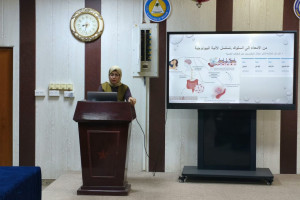
A seminar entitled (Bioremediation Technique for Treating Radionuclide Waste (NORM) Associated with Oil Production Operations) hold at the College of Science, Department of Physic.
The presenter Sabreen Jabbar Johnny.
The study aimed to highlight the problem of radioactive contamination resulting from the accumulation of Naturally Occurring Radioactive Materials (NORM) associated with oil production operations, which represent one of the major sources of radioactive contamination in the petroleum industry. It also explained the mechanisms of NORM formation and accumulation in scales, sludge, and deposits within oil production equipment, as well as the potential risks they pose to both human health and the environment. Furthermore, the study reviewed bioremediation as an environmentally friendly approach for reducing the radiological impact of these contaminants through the use of microorganisms.
The study included an overview of radioactive contamination and its natural and anthropogenic sources, with particular emphasis on NORM associated with oil production operations. It explained the processes by which these radioactive materials are transported from underground reservoirs to the surface due to pressure changes, water injection, and oil and gas extraction. In addition, the study described the principal naturally occurring radionuclides present in NORM, including uranium, thorium, radium, radon, and potassium-40, as well as their occurrence in oilfield waste. The study also discussed the concept of bioremediation and the use of bacteria to remove, immobilize, or reduce the mobility of radioactive contaminants, highlighting the advantages of this technology over conventional treatment methods in terms of efficiency, sustainability, lower cost, and reduced environmental impact.
Important News

viewed most